October 18th, 2026
Join the UK Energy Day on 10 November- Register now!
A grid connection queue is the list of projects waiting for permission to plug into the network, and the date it gives each one decides when it can start earning. For most of the past decade, generation cost was the binding constraint on the energy transition, now it's the network itself, and the queue is where that mismatch shows up.
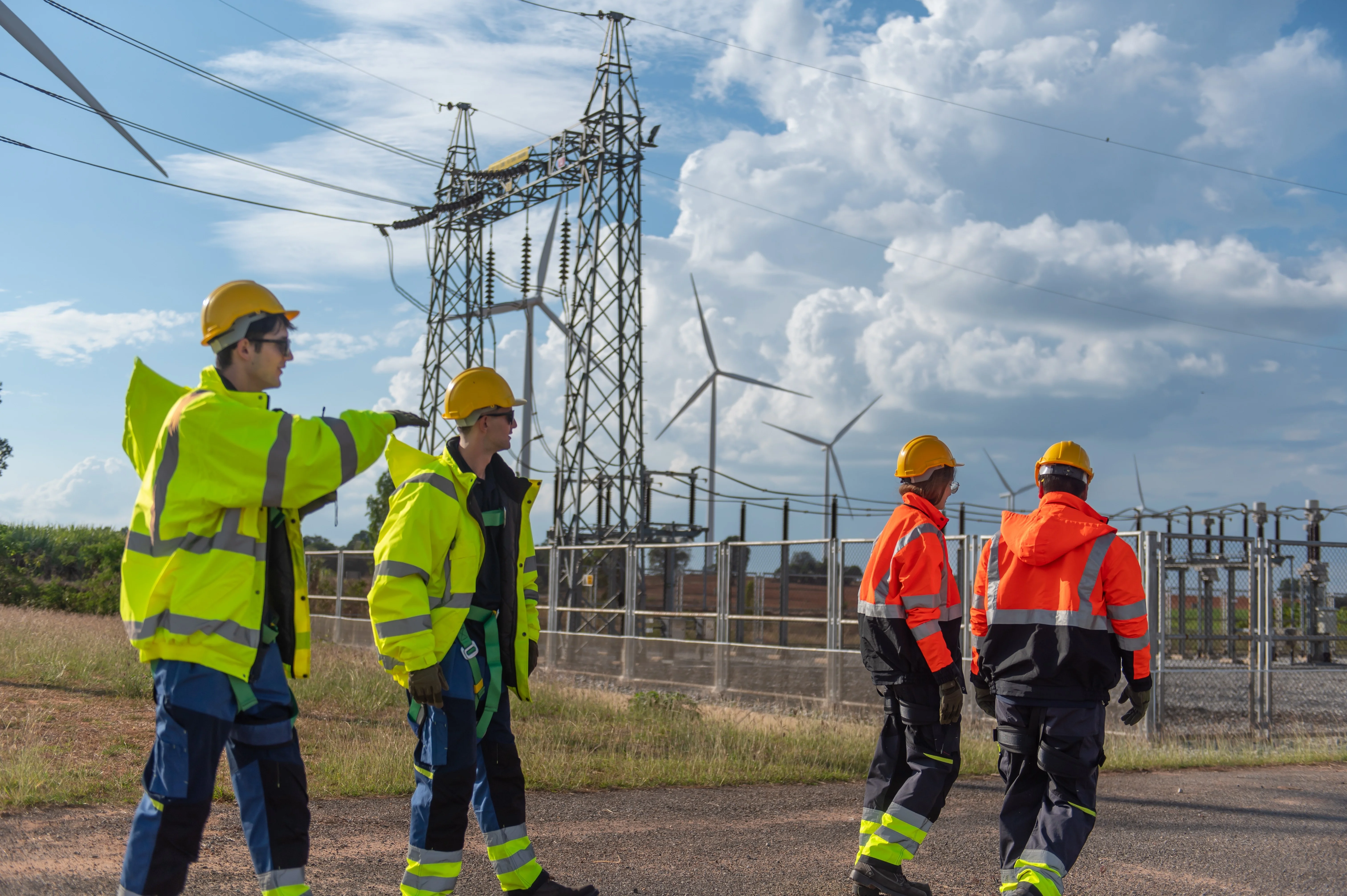
A grid connection queue is the list of projects waiting for permission to plug into the electricity network, along with the date on which each one will be allowed to do so. For a wind farm, a solar site or a battery, that date determines when it can start earning.
For most of the past decade, the binding constraint on the energy transition was the cost of generation. That is no longer the case. Wind, solar and storage can now be built faster and more cheaply than the network they connect to, and the queue is where that mismatch shows up.
Networks were planned on the basis of an assumption that no longer holds. A twentieth-century transmission system was designed around a small number of large, predictable power stations located close to fuel supplies or demand centres. Connection requests arrived at a manageable rate, and each could be assessed individually.
What arrived instead was a flood of applications from thousands of smaller projects, sited wherever the wind resource, the solar irradiance or the land availability was best - which is frequently a long way from where the network is strongest.
Falling technology costs, which made renewable and storage projects viable in far more locations than the network was built to serve
Low barriers to applying, since securing a queue position typically cost far less than the value of holding one, encouraging speculative applications
Speculative and duplicate submissions, where developers applied at several sites for a single project, or applied early simply to hold a place
Network build times measured in decades, against generation projects that can be built in two to three years.
The result was queues with several times more capacity than the system actually needed. In Great Britain, the connections queue reached roughly 722 GW - around four times the capacity required to meet the 2030 clean power target and roughly double what the system is expected to need by 2050.
That figure is not a measure of investor enthusiasm so much as a measure of process failure. A queue that large tells you the entry criteria were too loose, not that the pipeline was unusually healthy.
The mechanics vary by country, but the sequence is broadly consistent. A developer applies to the network operator, which assesses the reinforcement work required to make the connection safe and deliverable. The operator then issues a connection offer specifying a connection point, a set of works, a cost and a connection date. If the developer accepts, they enter into an agreement with milestones they must meet.
The critical design decision is how projects are ordered. Most systems historically operated on a first-come, first-served basis, which is administratively simple and superficially fair.
It also creates the problem the industry calls zombie projects. Under first-come, first-served, a project retains its queue position regardless of whether it has land rights, planning consent, financing, or any realistic prospect of being built. A speculative application submitted early sits ahead of a fully consented project submitted later, and the reinforcement works modelled for that speculative project shape the connection dates offered to everyone behind it.
Because network studies are cumulative, one unviable project does not merely occupy a slot. It changes the assessed requirements for the whole cluster around it, pushing connection dates for viable projects years further out.
Queue management milestones were introduced in several markets to address this, allowing operators to terminate agreements when developers miss defined progress markers. They helped, but they treated the symptom rather than the underlying ordering principle that created it.
The picture is further complicated by the split between transmission and distribution. Larger projects connect to the transmission network, while smaller generation and storage connect at the distribution level - but a distribution connection can still require transmission reinforcement if enough capacity accumulates in one area. Developers can therefore find a project held up by constraints several network layers above the one they applied to, with limited visibility of why.
Great Britain has had the most visible problem, with connection dates being offered into the late 2030s for projects that could physically be built within three years. It has also moved furthest towards fixing it.
Ireland’s constraint is unusually acute because it combines a small, weakly interconnected system with exceptional demand growth. The regulator operated a de facto moratorium on new data centre connections in the Dublin area from 2021, replacing it only at the end of 2025 with a conditional framework.
The Netherlands faces a different version of the same problem. Large parts of the country have been declared congested for both generation and demand, meaning new connections cannot be offered at any price until reinforcement is delivered. Grid congestion is now a mainstream commercial planning constraint rather than a technical footnote.
Spain’s difficulty has been access-point saturation, with connection permits at key substations heavily oversubscribed relative to available capacity. Germany’s bottleneck lies less in the queue itself than in the north-to-south transmission build required to move wind output to demand centres, where delivery has repeatedly slipped.
The common pattern is that the constraint has moved from generation to network, and from cost to time.
A distant connection date does not simply delay a project. It frequently kills it.
Final investment decisions become impossible when the revenue start date is a decade away and uncertain. Equipment pricing, contractor availability and cost assumptions cannot be held for that long, so the project stalls in development, consuming capital without progressing.
Power purchase agreements are similarly affected. Corporate buyers want delivery within a planning horizon, and a generator that cannot commit to a start date cannot sign a PPA. That, in turn, removes the contracted revenue that lenders require, so financing does not close.
Where projects do connect, they increasingly connect to constrained parts of the network, which raises curtailment risk. A wind farm that is regularly instructed to reduce output because the network cannot carry it earns considerably less than its resource would suggest, and constraint costs are ultimately paid by consumers. Combined with the growing frequency of very low and negative prices, examined in What are negative power prices? Why they happen and who benefits, this can materially reshape a project’s revenue case.
The aggregate effect is a widening gap between national capacity targets and deliverable pipelines. Governments have set 2030 targets that assume a build rate the connection process does not currently support, which is why queue reform has moved rapidly up the policy agenda.
Reform efforts have converged on three approaches.
The first is to reorder the queue by readiness and need. Great Britain has gone furthest, replacing first-come, first-served with what is described as “first ready and needed, first connected”. Projects are assessed against readiness criteria, such as land rights and planning progress, and against strategic alignment with national capacity targets. Those meeting both receive Gate 2 status, with a confirmed connection date, point and queue position. Those that do not are moved to Gate 1 and must reapply.
The effect has been substantial. Around 283 GW of generation and storage, plus roughly 99 GW of transmission-connected demand, moved into the reformed pipeline, split between projects connecting by 2030 and by 2035. More than 300 GW did not progress. Notably, batteries emerged as significantly oversupplied against 2030 requirements, with consequences for storage developers who assumed a connection would be available.
The second approach involves flexible, non-firm connections. Instead of ensuring constant full export capacity, a non-firm connection enables a project to connect earlier, with the understanding that its output may be limited during network constraints. For many projects, the limited hours during such constraints are brief enough that connecting five years earlier on non-firm terms is more advantageous than waiting for firm capacity.
The third is anticipatory investment: building network capacity ahead of confirmed demand rather than waiting for projects to justify it. This is the most expensive option and the hardest to regulate, because it requires consumers to fund infrastructure before its users have committed. It is also the only approach that addresses the underlying cause rather than merely rationing a fixed resource more intelligently.
Connection queues became the transition’s binding constraint because network planning and generation deployment operate on incompatible timescales. Reform has been about triage - deciding which projects receive scarce capacity – rather than about creating more capacity.
Three indicators will show whether it is working. The first is whether reformed queues deliver confirmed connection dates and whether those dates hold once offers are issued. The second is reinforcement spend and whether network operators can convert record investment allowances into physical infrastructure at the required pace. The third, and most telling, is whether connection dates start moving earlier rather than later.
There is a broader question at stake. Queue reform allocates capacity more intelligently, but it does not add any capacity. If demand growth from electrification and data centre load arrives as forecast, a well-ordered queue for insufficient network capacity will still be a queue.
See how grid constraints and curtailment reshape a renewable project's revenue case."
October 18th, 2026
October 13th, 2026
October 12th, 2026
Montel Monthly Newsletter