





How to hedge energy costs without sacrificing sustainability
Thanks to the detailed reporting and internal governance that have become the norm in the modern energy market, energy hedging, when implemented correctly, can complement procurement. We can also integrate green products and certificates, such as Guarantees of Origin, which help to strengthen any sustainability claims, or Power Purchase Agreements (PPAs), which can fix energy pricing and reduce the risk of renewable energy procurement. There are various contract structures, such as fixed, flexible, and index-linked, with varying levels of price fix vs. market exposure and flexibility. These tools can help educate and reassure participants in energy buying, including energy procurement specialists, finance teams, and risk officers.
These techniques can provide practical insight into how to successfully build cost stability and low-carbon resilience together as part of an energy procurement plan. We’ll explore how energy buyers can manage exposure to price volatility while maintaining credible sustainability commitments.
Why volatility management matters for buyers
Price volatility can lead to both price increases and decreases for energy producers. But what causes these spikes, and what’s the best way to approach them?
2021–2023 market volatility
The global events of 2021-2023, including the Covid pandemic and the geopolitical tensions between Ukraine and Russia led to an imbalance in the energy market, with energy prices peaking as the usual energy supply became unstable. When a period of financial instability arises in this way, volatility can be managed through techniques such as hedging or fixed-price contracts.
The importance of timing and risk appetite
Timing for optimal price rises and falls is tricky; keeping an overall view of market cycles is key to participating in the green energy market. While experienced traders can often leverage short-term price drops in shorter-term contracts, businesses looking at a longer-term trajectory might be better off investing and holding for a more extended period, missing out on short-term price drops but avoiding short-term price rises. Both types of energy investors need to determine their risk appetite and how their business might cope with the harmful elements of this risk.
Fixed vs. flexible procurement contracts
The flexibility to benefit from price drops can reduce the risk of investing in renewable energy, but fixed pricing can also help businesses save money in the long term.
Pros/cons of fixed-price deals vs. tranche buying
For energy pricing security, fixed-price deals such as PPAs allow a business to know the price of energy for the lifetime of the contract, improving operational forward planning and potentially saving money. Tranche buying, on the other hand, is a key hedging tool that allows energy procurers to buy energy in smaller parcels over the lifetime of the contract, thereby reducing the risk of trading on the open market.
Examples of flexible frameworks for large buyers
This example of tranche purchasing can be a good option for larger buyers, who often require more flexible investment frameworks for sustainable energy. Financial derivatives can also be successful tools for larger businesses to hedge energy, with swaps, in which floating market prices can be exchanged for fixed prices in certain instances, and futures, in which contracts allow a procurer to buy a specific quantity of energy on a particular date, both of which are good options to reduce risk in buying.
Integrating hedging with renewable sourcing
It can help to combine multiple risk strategies within a hedging framework. For example, the long-term cost-saving credentials of PPA coverage can be combined with the verification of a Guarantee of Origin backed supply which guarantees the energy is derived from os a renewable source. At the same time, wholesale hedges can target the medium-term wholesale market. All of these factors together can help to hedge energy costs, without sacrificing sustainability. Investing in renewable energy can also lead to price declines due to the correlation between market prices and carbon intensity. Fossil fuels emit carbon when operational, increasing their carbon intensity during that time. By contrast, renewable energy emits limited or zero carbon during operations, reducing carbon intensity and, as a result, the price.
Tools and data for smart risk management
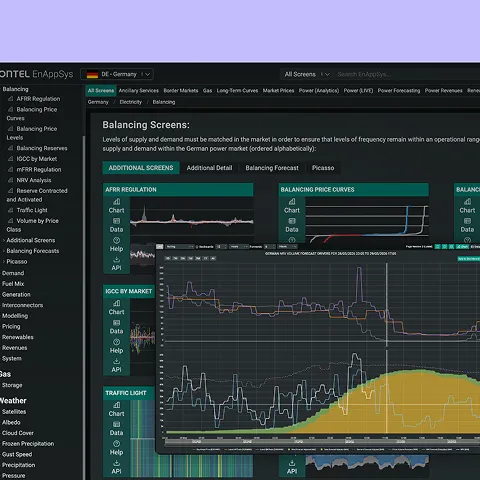
Energy procurers can manage risk more effectively by deploying specialised analytics to predict how the market may react. Forward curves can dictate future energy prices, while analytics platforms can help make sense of these prices and how they might inform both hedging strategies and a business’s broader sustainability agenda. Scenario testing involves simulating multiple hypothetical scenarios and assessing how a company could withstand each level of risk, which can help with budget forecasting under different hedging ratios.
Governance, reporting and sustainability alignment
Internal controls and audit requirements can help to verify a business’s Environmental, Societal and Governance (ESG) goals, which help to attract investors and alleviate risk concerns of lenders. Elements that may be audited might include data, technology utilisation, process and control measures. The next step is to link financial and sustainability reporting: this provides a holistic overview of your business and shows how investing in sustainability has positively (or negatively) affected your capital, and could help boost your brand reputation. A good hedge covers both your budget and your reputation, the key is integrating financial and carbon data.