





The rhythm of electricity: How the quarter-hour is changing the energy market

The rhythm of electricity: How the quarter-hour is changing the energy market
On October 1, 2025, the European power market underwent a fundamental shift: the day‑ahead auction moved from hourly blocks to 15‑minute intervals. The goal is to better capture the rising volatility driven by a growing share of renewables and to enable more flexible responses to short‑term generation swings. What does this mean for the price structure? Early evidence suggests the change has not only altered market mechanics but also introduced a familiar intraday pattern into day‑ahead prices: the “sawtooth.”
A look at the data
A before‑and‑after comparison makes the shift clear. The chart contrasts the last days of September with the first days of October. While September prices sat in smooth hourly steps, prices from October 1 show fine spikes, otherwise known as the classic sawtooth. Within a single hour, prices now vary markedly. In the morning, steep PV ramps often make the first quarter‑hour the most expensive, with prices easing toward the last quarter‑hour before rising again in the next hour. In the evening, as solar output falls, this pattern reverses.
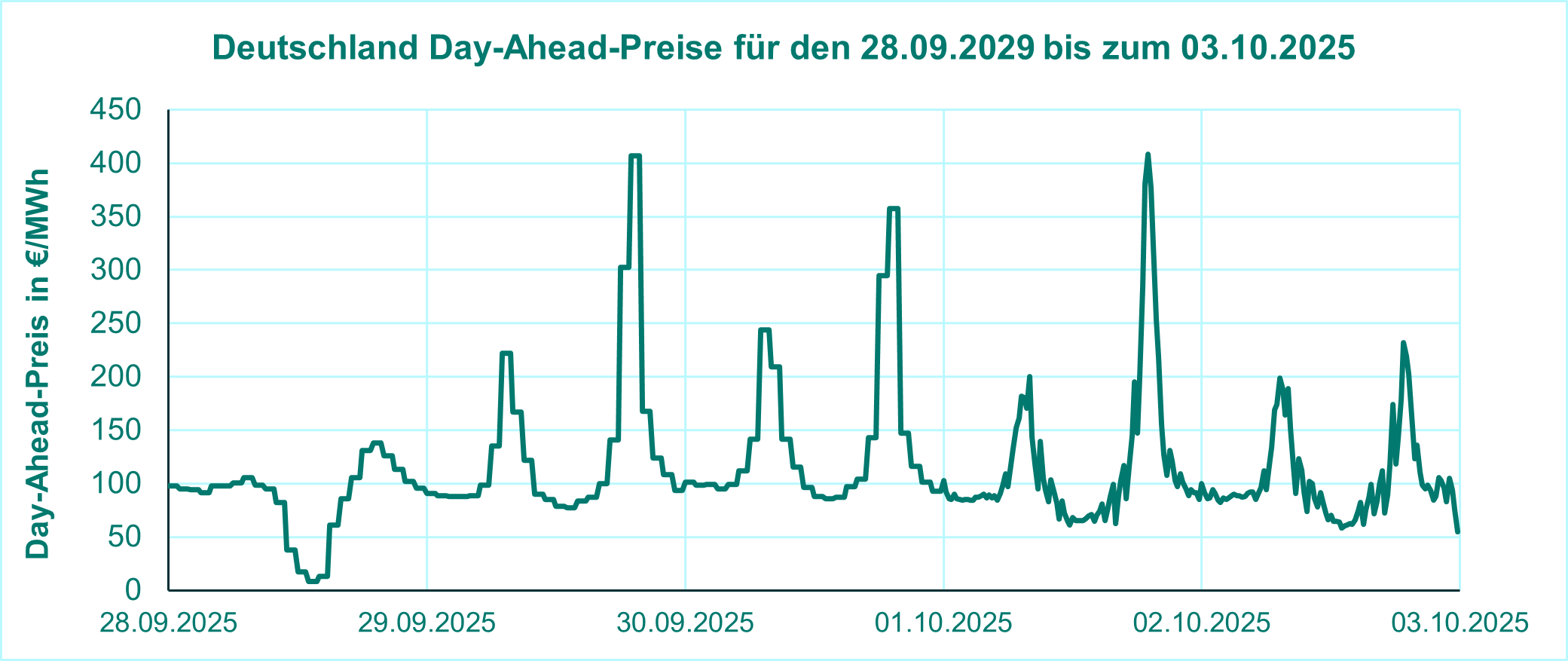
An initial analysis supports this picture. The average standard deviation of day‑ahead prices in the first seven days of October was roughly 15% higher than in the same period a year earlier. This increase in short‑term volatility should be interpreted with caution, as 2025 has been more volatile overall. Trading behaviour has shifted even more visibly. A direct before‑and‑after comparison shows that average volume in the first Intraday Auction (IDA1) fell from about 28,000MWh per day in the last two weeks of September to around 17,000MWh in the first week of October. The first week of October 2024 also shows higher volumes at roughly 27,000MWh. The implication is clear: more liquidity is migrating to the day‑ahead market.
Why does the sawtooth pattern occur?
The explanation lies in market logic and physical conditions:
- Cross-border trading (FBMC): Trading capacities in flow-based market coupling continue to be fixed on an hourly basis. Short-term changes within this hour, such as rapid PV ramps, cannot be taken into account, which favors price jumps between individual quarter-hours.
- Bidding behavior of conventional power plants: Many conventional power plants continue to bid in hourly blocks in order to comply with their physical start-up and shutdown restrictions. This further exacerbates price differences.
- Physical reality: While trading platforms are ready, many power plants were designed for hourly operation. Technical and strategic adaptation to the new 15-minute cycle takes time.
Outlook
Will the sawtooth smooth out? Likely in the medium term. In winter, less pronounced PV ramps naturally dampen the effect. Participants will also refine bidding strategies, and added flexibility, such as battery storage, should further curb short‑term fluctuations. In the long run, however, as long as hourly mechanisms like flow‑based market coupling and rigid block bids dominate, intra‑hour volatility is poised to remain a defining feature of the day‑ahead market.