





Renewable cannibalisation explained: why more solar and wind can reduce captured prices
When one renewable energy source produces an excess of energy at the same time as another, it can result in what’s known as renewable cannibalisation. This is often due to weather; for example, when sun and wind occur simultaneously, it can generate an excess of both wind and solar power. This excess energy then floods the grid, reducing prices for both forms of energy.
It’s crucial that investors, traders, and analysts clearly understand cannibalisation, grasp price mechanics, and their effects on the wider energy market.
This article will show the regional impacts of renewable cannibalisation and highlight its investment implications. We’ll explain how renewable growth changes price formation and reduces realised revenues for generators.
What renewable cannibalisation means
Wind and solar power are weather-driven and have near-zero marginal cost. During the "merit order" process, higher-cost fossil-fuel generators are pushed off the grid, meaning the cheapest available generation sets the price.
Declining realised prices as renewable penetration increases
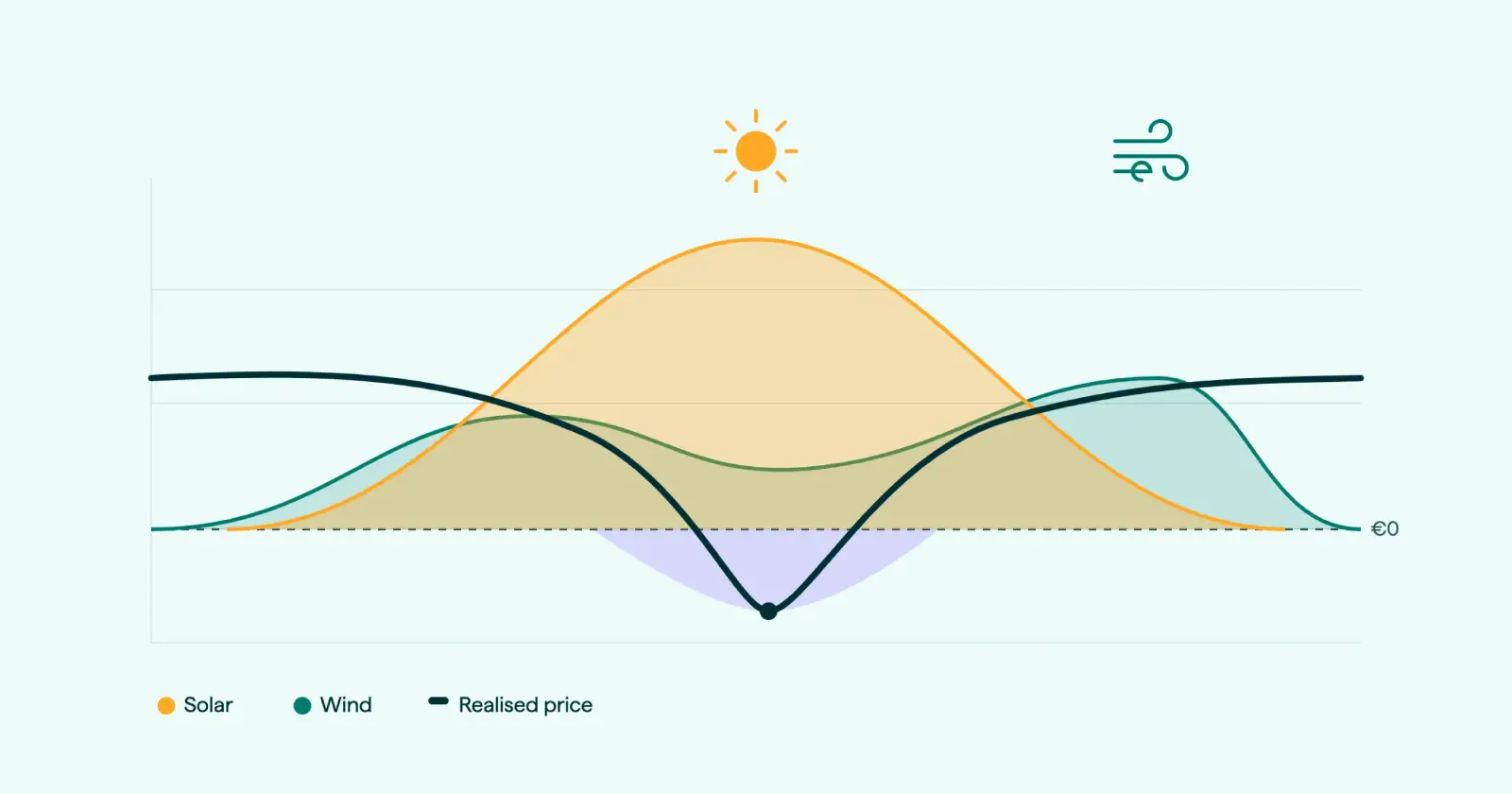
As the usage of renewable energy increases, the average revenue generated decreases. The price troughs (known as price depression) also drop. When generation is at its peak, negative pricing occurs as supply overtakes demand.
Certain types of renewable energy generate energy at exactly the same time, thanks to weather conditions. When wind and solar which rely on sunny, clear weather produce a lot of energy at the same time, the grid is flooded with energy, which makes wholesale prices decrease. This is what's known as price cannibalisation.
Because there are almost zero marginal costs associated with wind and solar, they restructure the merit order, pushing the usual top sources - gas and coal - off of the top slot. This pushes down all wholesale energy prices.
Difference between market price and capture price
Market price, also known as baseload pricing, is the average price over the whole year. Capture price, on the other hand, is the actual revenue the renewable energy generates based on volume. The intermittency of solar and wind can create a gap between these two prices, with solar capture prices often much lower than baseload market prices in regions like Spain.
How capture prices differ from wholesale prices
Capture prices differ from wholesale prices because wholesale prices reflect the static, flat average cost of electricity, while capture prices represent the actual, generation-weighted revenue a specific power plant earns. Because renewable generation peaks under specific weather conditions, its realised revenue often falls below the overall market price.
Generation-weighted realised prices
We calculate realised revenue by weighting wholesale prices by the amount of electricity a source produces per hour. Solar, for example, is weighted more towards midday pricing because sunlight is required for energy production. When midday prices dip, so does solar's realised price.
Why solar and wind cannibalise themselves
Simultaneous generation patterns can be used to predict when energy sources might cannibalise themselves. One such pattern is a model known as a duck curve. Solar and wind both take advantage of weather patterns, with huge supply spikes and consequent drop-offs. When more and more similar assets are added without battery backup, prices can drop to zero.
Midday solar oversupply
When the sun is at its highest, solar generation is at its peak. When the day is very sunny, lots of energy floods the market. Unfortunately, this isn't in line with when residential energy is generally consumed, which tends to be mornings and evenings. When this energy isn't consumed, prices crash due to surplus energy.
Wind-heavy overnight periods
Often at night, wind energy increases because nights can be stormier than during the day. As very little residential power is consumed overnight, these overnight surges can cause another wave of negative pricing.
Regional differences across Europe
When wind and solar overloads the grid at the same time, prices are depressed, which decreases profit margins for generators.
Solar-heavy southern Europe
In Spain and France, solar is king because of an abundance of sunlight. However, solar power is only generated during the day, which causes a lot of power to be generated during these hours. Because of this abundance of energy produced at once, prices crash. Energy needs are actually higher at night than they are during the day, also causing price spikes in the evening when solar generates less energy. Spain, in particular, has suffered from price cannibalisation.
Wind-heavy Nordics and Germany
Wind generation is less concentrated due to the weather than solar because it can generate day or night. When cannibalisation occurs on an intraday level, it's called geographic averaging. However, certain regions, such as Germany, push day-ahead wholesale prices below zero so that generators are paying the grid to use power during these periods.
Implications for investors and traders
When captured prices fall below a plant's levelised cost of energy (LCOE), a project can quickly become uneconomical. This results in volatile intraday pricing spreads, which traders can capitalise on, which are higher risk but also higher profit. This can end up with traders holding links with assets that don't perform according to predicted forecasts.
Importance of hedging and storage integration
Batteries allow storage and flexibility, which means generators can co-locate batteries to plants, banking energy at low or negative prices and selling once prices increase. This swaps selling energy as a raw, immediate commodity to a model that sells with flexibility and arbitrage.