





Back to Resources
Analytics
Explore the evolving energy market with expert analysis, data-driven insights, and forecasts to help you navigate trends, pricing shifts, and strategic opportunities.

Last article
October 20, 2026
Power trading portfolio optimisation explained: from positions to strategy
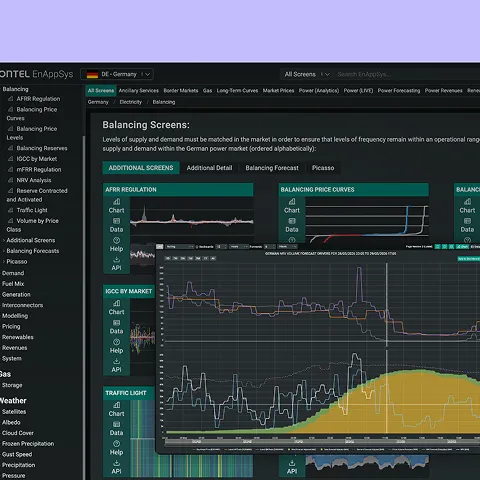
Power trading portfolio optimisation is central to modern electricity trading strategies. Traders no longer focus on isolated positions in one market or timeframe. Instead, they continuously balance spot exposure, intraday opportunities, forward hedges, ancillary participation, and cross-commodity relationships within a single, integrated portfolio.
9
min read
Read more
Latest articles
Explore the energy market with expert analysis, insights, and forecasts to navigate trends and opportunities.
October 20, 2026
Power trading portfolio optimisation explained: from positions to strategy
Power trading portfolio optimisation is central to modern electricity trading strategies. Traders no longer focus on isolated positions in one market or timeframe. Instead, they continuously balance spot exposure, intraday opportunities, forward hedges, ancillary participation, and cross-commodity relationships within a single, integrated portfolio.
9
min read
Read more
October 19, 2026
What are grid connection queues, and why are they delaying the energy transition?
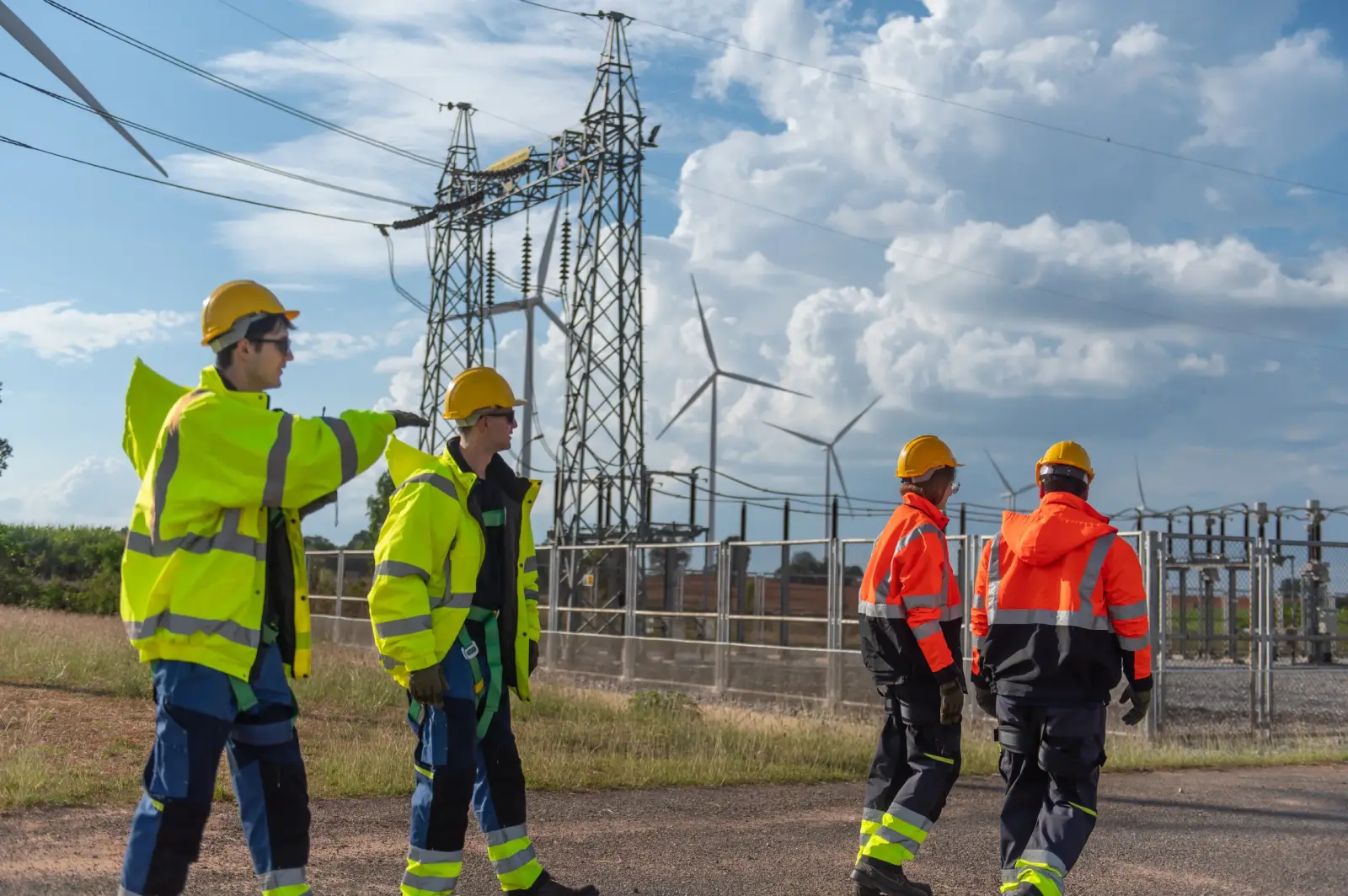
A grid connection queue is the list of projects waiting for permission to plug into the network, and the date it gives each one decides when it can start earning. For most of the past decade, generation cost was the binding constraint on the energy transition, now it's the network itself, and the queue is where that mismatch shows up.
8
min read
Read more
October 18, 2026
How to read a power forward curve and what it signals about future prices
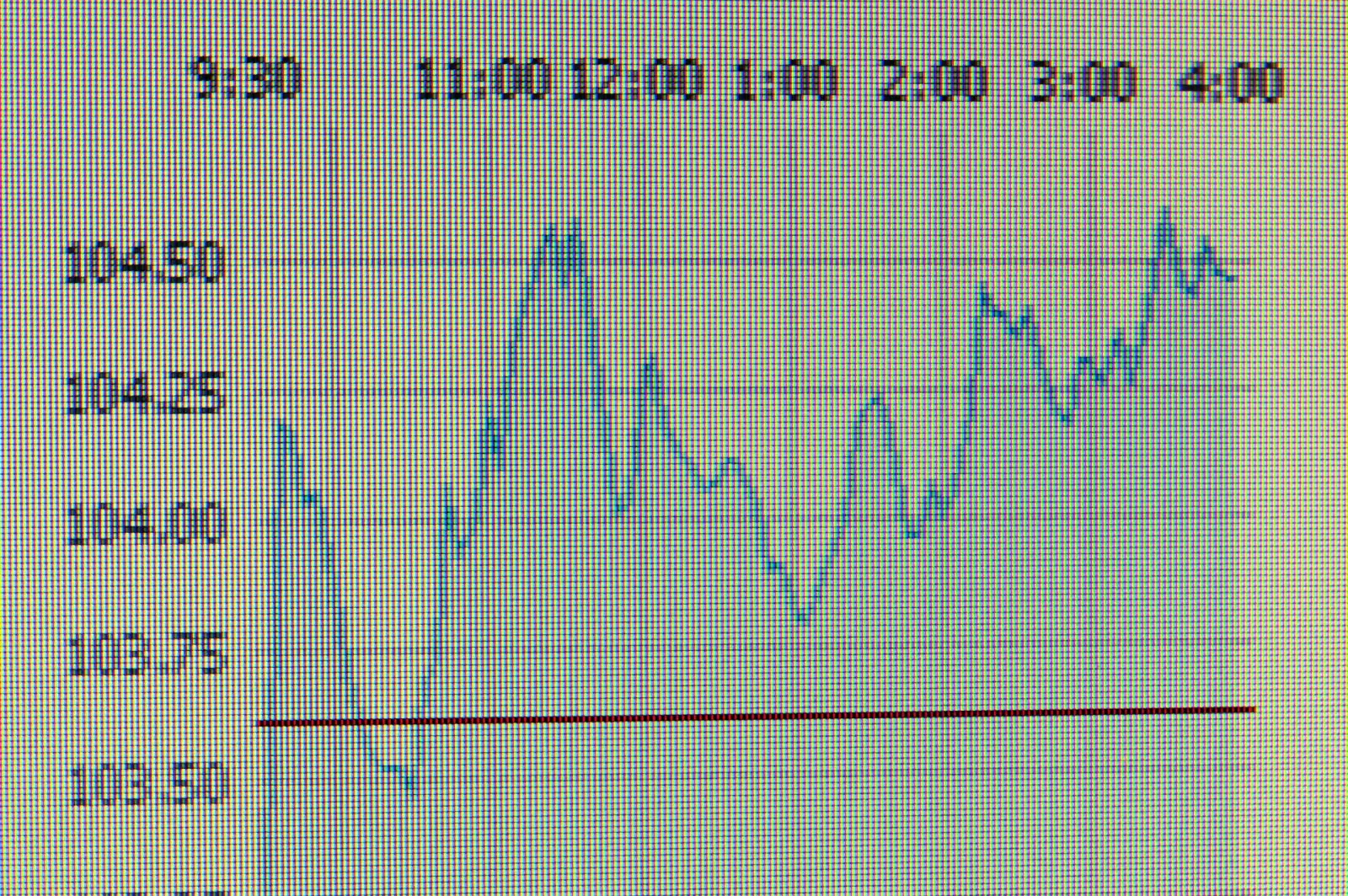
A power forward curve reflects the market's present expectations of supply, demand and fuel costs for future delivery, plus the risk premium participants need to lock in a price now, rather than a forecast of where spot will land. Here's how to read its shape, from contango and backwardation to seasonal patterns, and what each says about the drivers behind it.
7
min read
Read more

June 1, 2026
Why haven’t higher gas prices hit German power prices yet?
The expectation after the Iran conflict was straightforward: higher gas prices, higher gas burn and higher carbon costs should have pushed German electricity prices up. Yet the data shows the opposite: EPEX spot prices are lower, distributions are softer and the move is statistically significant. At the same time, gas-to-power generation has increased, carbon prices are higher than in 2025 and futures still point to stronger summer pricing. So why is the expected transmission into power prices not showing up?
4
min read
Read more
May 31, 2026
Forward curves and carbon risk: how EUA expectations shape power pricing
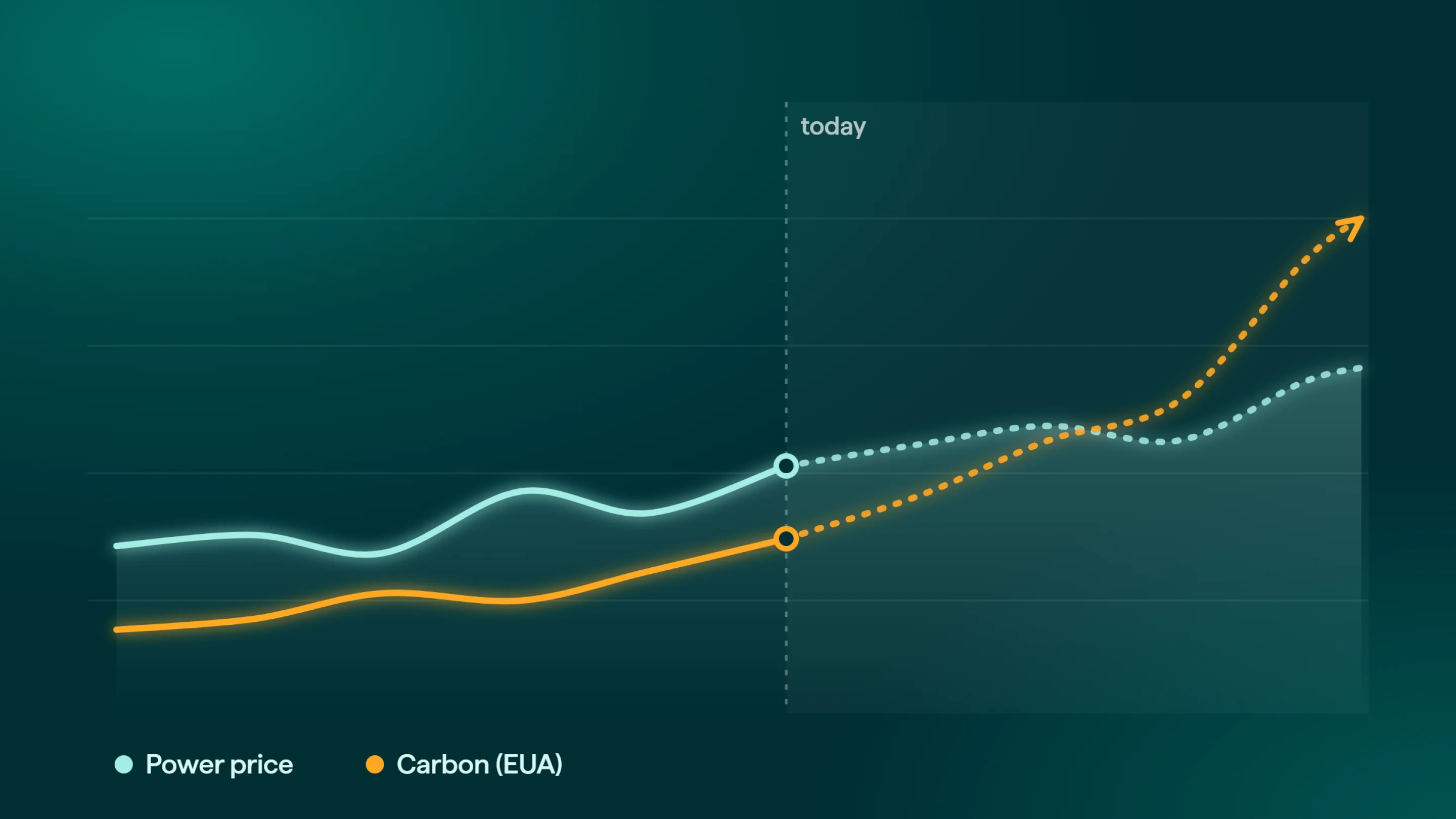
Traders on the energy market have a wide array of tools in their arsenal, and one key metric is the forward curve for European Union Allowances (EUAs). They act as a crucial driver of power pricing, allowing traders an overview of the cost of electricity with carbon costs factored in. EUA expectations can often be informed by cross-commodity trading signals. For example, if the EAU market suggests a shortage of allowances in later years, forward curves will push carbon prices higher in those years.
4
min read
Read more
May 28, 2026
Automated intraday trading in power markets: turning forecast changes into trades
Intraday power markets are where algorithmic trading provides some of its most tangible value. Prices move rapidly, liquidity fluctuates throughout the day, and new information arrives constantly. For traders, the challenge is not just predicting where prices will go, but reacting quickly enough to seize opportunities before they vanish.
8
min read
Read more

May 25, 2026
Carbon prices and power markets: understanding the coupling mechanism
The price of energy, whatever the source, is intrinsically linked to carbon prices - if carbon pricing rises, so do operational costs, making one source less economical than alternative sources. This is particularly relevant for fossil fuels, which can make them less competitive than renewable options. Carbon pricing is transmitted directly into wholesale electricity prices, but it can be difficult to work out how carbon costs affect the wider generation stack. Regional differences across Europe can also affect different sources - generation economics tend to change with EUA movements as regions continuously adjust to accommodate localised legislation, policies, and energy generation types.
4
min read
Read more
May 22, 2026
Transmission congestion and electricity price spreads in European markets
Transmission congestion is one of the most important drivers of electricity price differences across European power markets. Even in a highly interconnected system, physical constraints in the network can hinder the flow of electricity between regions, resulting in persistent and sometimes substantial price spreads.
8
min read
Read more

May 20, 2026
Market coupling in Europe: how it reduces and sometimes increases price divergence
European electricity markets have experienced a major transformation over the last twenty years, with market coupling playing a crucial role in linking national systems. By coordinating cross-border electricity trading, market coupling has increased efficiency, boosted competition, and supported the growth of a more unified European power market.
7
min read
Read more
Insights. Strategy.
Thought leadership that drives results.
In-depth analyses and expert insights from industry veterans shaping the conversation.

André Bosschaart
Battery storage

Priyanka Shinde
Nordic analytics

Felix Lohmeyer
Price forward curves

Fintan Devenney
GB and Irish power

Josephine Steppat
PPAs and scenarios

Ben Wrigley
Benelux power curve

Liubov Koroleva
Nordic power

Marc Hasenbeck
Risk and valuation